Tooth Extractions & Oral Surgery in Edgware
Gentle tooth removal and oral surgery — including wisdom teeth. Performed in a calm, modern environment with sedation available for nervous patients.
Book Online opens in our secure Dentally Portal — verified by SMS. All treatment plans start with a check-up.
from £150
- Gentle techniques that minimise discomfort
- Sedation available for nervous patients
- Wisdom teeth handled in-house in most cases
- Detailed aftercare and same-day support
- Clear pricing with no surprises
A calm, confident hand for difficult cases
At Campos Dental, we understand the prospect of tooth extraction or oral surgery can feel overwhelming. Our experienced team is committed to delivering exceptional care with a focus on comfort, safety and patient well-being. We treat extraction patients from across Edgware, Stanmore, Mill Hill and the surrounding North London area — many of whom arrive nervous about the appointment and tell us afterwards that the experience was significantly less difficult than they had expected.
When extraction is needed
We always try to save a tooth where possible — through root canal treatment, crowns or other restorative work. But sometimes extraction is genuinely the right answer:
- Severe decay that has reached the pulp and cannot realistically be saved with endodontic treatment
- Advanced gum disease that has loosened the tooth beyond rescue — see our healthy gums service for the cases we can still treat
- Traumatic damage beyond the point of restoration (a vertically-cracked tooth, for example)
- Impacted wisdom teeth causing pain, infection, repeated soft-tissue trauma or crowding
- Orthodontic preparation — occasionally we need to create space for the rest of the bite to fit properly during orthodontic treatment
We’ll be honest at the consultation if extraction is the right call. We won’t take you through a long and expensive root canal on a tooth that probably won’t survive it, and we won’t extract a tooth that genuinely could be saved with restorative work.
What to expect
- Consultation and planning. A clinical examination plus any X-rays needed to assess the position and condition of the tooth. For impacted wisdom teeth and complex surgical cases we may take a 3D CBCT scan to see the relationship between the tooth roots and the lower jaw nerve.
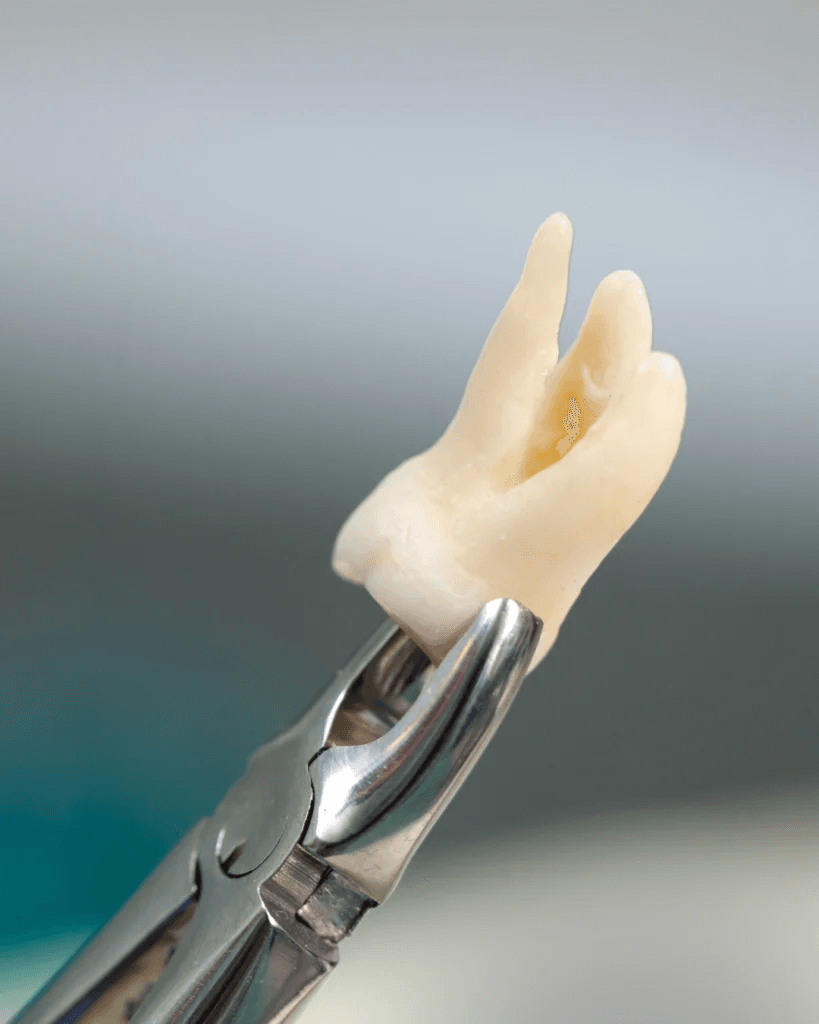
- The procedure. Local anaesthetic ensures complete numbness — we check this is working fully before any work begins. For simple extractions, the tooth is gently loosened with specific instruments and removed; the appointment is typically 30–45 minutes. For more complex cases (surgical extractions), a small incision in the gum allows access to the tooth, sometimes with division of the root into sections for easier removal. We close the gum with dissolving sutures where needed.
- Aftercare. We apply a dressing to control bleeding and help a healthy blood clot form in the socket. You leave with detailed written aftercare instructions, simple painkillers if needed, and our direct contact number for any concerns. A follow-up appointment is booked for a week to ten days later to check healing.
Wisdom teeth
Wisdom teeth — the last molars to emerge, usually in your late teens or early twenties — often cause problems because there’s no space for them to come through properly. Impacted wisdom teeth can cause pain, swelling, infection (a condition called pericoronitis, where the gum over the partially-erupted tooth gets repeatedly inflamed), and gradual damage to neighbouring teeth.
We can usually handle wisdom-tooth removal in-house. For deeply impacted cases that need maxillofacial expertise — particularly lower wisdom teeth where the roots sit close to the inferior alveolar nerve on the CBCT scan — we work with trusted specialist colleagues nearby and refer where the case warrants it. Honesty matters here: getting the right hands on a complex case from the start tends to be safer and quicker than starting in the wrong place.
Dry socket — what it is and how to prevent it
The single complication most patients ask about after an extraction is dry socket — also called alveolar osteitis. It’s worth understanding because it’s both preventable and treatable.
What it is
After an extraction, a blood clot forms in the socket and acts as both a wound dressing and the foundation for new bone and gum to grow back. Dry socket is what happens when that clot is dislodged or breaks down prematurely, exposing the underlying bone. It causes a deep, dull, persistent ache around the extraction site that typically starts two to four days after the tooth came out and feels worse than the original extraction discomfort. The pain often radiates to the ear or temple on the same side and isn’t well-controlled by simple painkillers.
Dry socket isn’t dangerous, but it’s significantly more uncomfortable than a normally-healing extraction site, and it tends to delay healing by a week or two if untreated. Treatment is straightforward — we’ll see you for a short appointment, gently irrigate the socket, and dress it with a soothing antiseptic paste that protects the bone and resolves the pain rapidly. The dressing may need refreshing once or twice over the following days.
How to reduce the risk
The clot is fragile in the first 24–48 hours. The single biggest things you can do to protect it:
- Don’t smoke for at least 48 hours after the extraction, ideally longer. Smoking is the single most significant preventable risk factor for dry socket — partly the nicotine, partly the sucking action. If you smoke, this is the time to seriously consider stopping.
- Don’t drink through a straw — the suction can dislodge the clot. Drink directly from a glass for the first few days.
- Don’t rinse vigorously for the first 24 hours. After that, gentle warm salt-water rinses (a teaspoon of salt in a glass of warm water) two or three times a day help keep the area clean.
- Don’t spit forcefully in the first 24 hours. Let saliva drool into a sink rather than spitting if needed.
- Avoid alcohol for the first 24 hours — it interferes with both clotting and any painkillers you’ve taken.
- Take it easy for the rest of the day of extraction. Heavy exercise raises blood pressure and can increase the chance of bleeding starting up again.
Dry socket is more common in lower extractions than upper, more common in smokers than non-smokers, and more common in surgical extractions than simple ones — but most extractions heal completely uneventfully. If you do develop the symptoms above, call us promptly; the longer it goes untreated the longer the recovery.
When to call us
The vast majority of extractions heal smoothly with nothing more than the written aftercare. Call us on 020 3971 2000 if any of the following happens:
- Heavy bleeding that doesn’t stop after 24 hours — some oozing in the first 12–24 hours is normal, especially when you wake up the morning after; brisk, fresh bleeding that won’t settle with firm gauze pressure for 30 minutes needs a check.
- Increasing pain after day three — pain should be peaking on days one and two and easing from day three onwards. Pain that’s getting worse rather than better, particularly with a deep ache radiating to the ear, is the classic dry-socket pattern and is straightforward to treat once we see you.
- Fever, spreading swelling, difficulty swallowing or opening your mouth — these can suggest infection that needs prompt attention, particularly after lower wisdom-tooth removal.
- Numbness that hasn’t returned after 24 hours — local anaesthetic should fully wear off within a few hours; persistent numbness in the lip, chin or tongue after a lower extraction is uncommon but should be reviewed.
- Anything you’re worried about. We’d rather you called and we reassured you on the phone than worried at home.
We keep emergency time available every weekday and our team can be reached by phone for urgent post-extraction questions.
Sedation for nervous patients
If the idea of an extraction is causing you anxiety, please tell us. We can arrange IV sedation (a form of conscious sedation, delivered intravenously by a visiting anaesthetist) that keeps you relaxed and comfortable throughout — many nervous patients tell us IV sedation transformed their experience of dentistry. You remain awake and able to respond, but the anxiety is significantly dulled and most patients have little or no memory of the procedure afterwards. We’ll talk through whether sedation is right for your case at consultation, including the practical implications (you need a responsible adult to accompany you home and you can’t drive for the rest of the day).
Pricing and finance
- Simple extractions — from £150
- Surgical extractions — from £350
- Bone grafting (if needed at the same time) — from £495
- Wisdom tooth extractions — quoted on the X-ray findings, typically falling within the surgical extraction range
Every quote is a single fixed all-inclusive figure covering the consultation, X-rays, the procedure itself and the follow-up. Our full price list is on the fees page. 0% finance is available via Chrysalis Finance and adult members of our dental plan receive 10% off treatment.
Considering an extraction?
All treatment plans start with a check-up. Book yours online at our Edgware practice — we’ll examine the tooth, take the X-rays needed, and honestly recommend whether extraction is the right answer — or whether root canal, a crown or another restorative option could save the tooth instead. If a tooth genuinely does need to come out, we’ll talk you through the replacement options (dental implants, bridges or dentures) at the same appointment so you can plan ahead rather than be caught out later. Get in touch to get started.
Further reading from the blog
- Tooth extraction in Edgware: what the appointment actually involves — step-by-step walk-through of the appointment, the simple-vs-surgical distinction, IV sedation for anxious patients, and the week-by-week recovery picture including dry socket warning signs.
Frequently asked
Will the extraction hurt?
When do I need a wisdom tooth out?
How long is recovery?
How much does an extraction cost?
What can I eat after an extraction?
Should I take time off work?
You might also be looking at.
Dental Implants
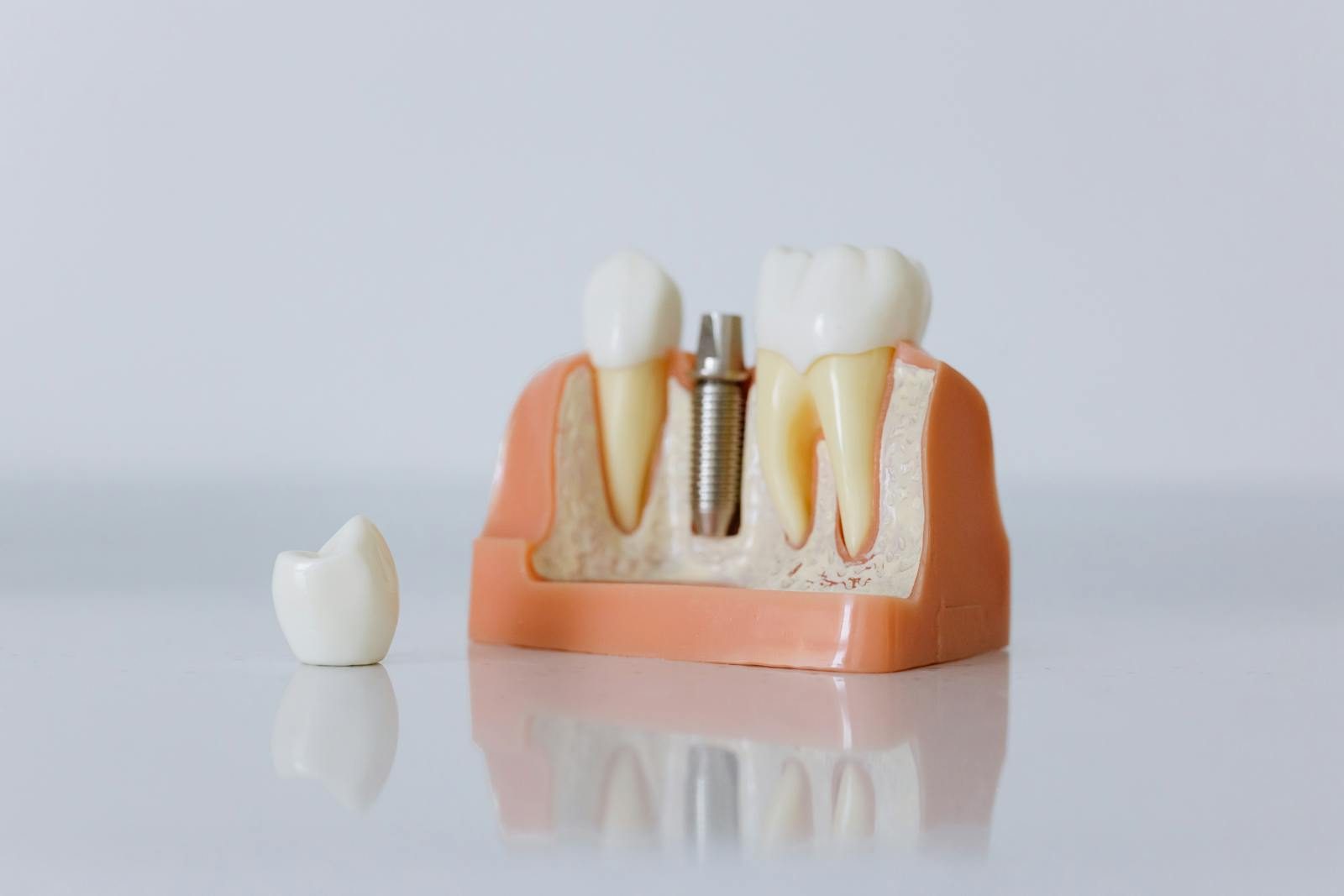
from £1,250A long-lasting, natural-looking way to replace missing teeth. A titanium post integrates with your jawbone to support a crown, bridge or denture that feels and functions like your own.
Learn more
General Dentistry
from £50Routine, preventative and family dentistry — the foundation of a healthy smile. Check-ups, hygiene visits, tooth-coloured fillings, and oral cancer screening for every age.
Learn more
Root Canal Treatment
from £350Modern root canal treatment to save an infected or damaged tooth — gentler than its reputation, and far better than losing the tooth.
Learn moreFind us in Edgware.
Free 30-minute parking out front and a step-free entrance. Pop in for a look or call ahead — we usually answer within a few rings.
Campos Dental
70 Edgware Way
Edgware, HA8 8JS
Call us
020 3971 2000Contact us
Send us a message →Opening hours
- Mon – Fri 9:00 am – 5:30 pm (closed 1–2 pm)
- Sat by appointment
- Sun closed
Considering this treatment?
All treatment plans start with a check-up. Book yours online — we'll talk you through the options for this treatment, explain pricing, and only recommend treatment if it's genuinely right for you.
Book Online opens in our secure Dentally Portal — verified by SMS. All treatment plans start with a check-up.